
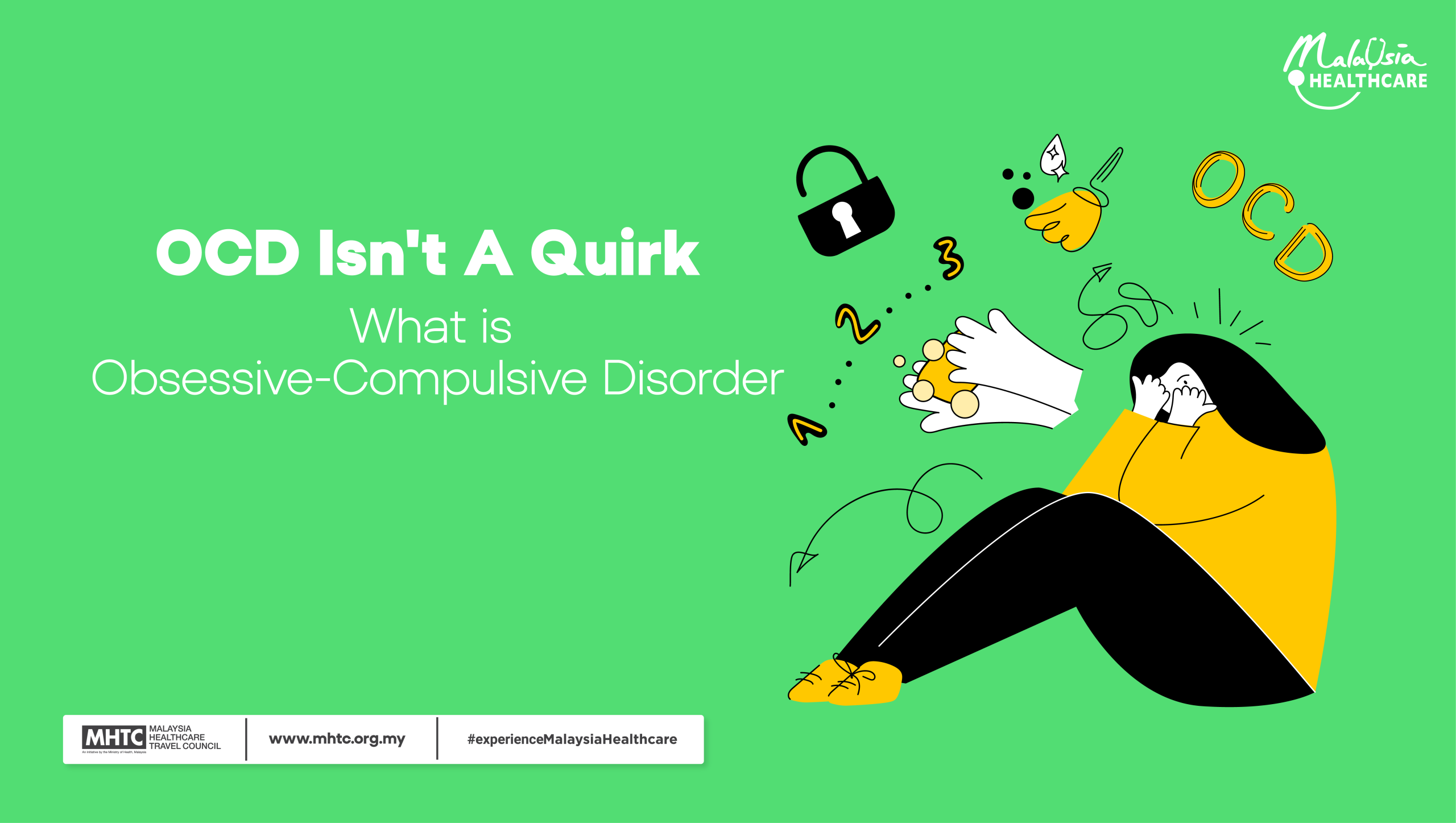
WHAT IS OBSESSIVE-COMPULSIVE DISORDER?
What is Obsessive-Compulsive Disorder (OCD)?
Obsessive-compulsive disorder (OCD) is a pattern of unwanted thoughts and fears known as obsessions that cause you to perform repetitive actions known as compulsions. These behaviours can interfere with your daily life, and even if you try to ignore the thoughts, they often return.
A common OCD is the fear of getting contaminated by germs. To relieve this anxiety, a person may keep on washing their hands until the skin becomes sore and damaged.

Image by tirachardz, designed by Freepik
What are the symptoms of obsessive-compulsive disorder?
The symptoms are divided into obsessions and compulsions. For a formal diagnosis of OCD, a person typically needs to experience both obsessive thoughts and compulsive behaviors, though the specific symptoms may vary in intensity from person to person.
Obsessions are unwanted, intrusive thoughts, urges or mental images, the presence of which usually causes marked distress or anxiety. Usually, one will try to suppress these obsessions by performing a compulsion. Compulsion or known as rituals are excessive repetitive behaviour that one feel must be done to reduce the anxiety caused by their obsessive thoughts. For example:
- Washing and cleaning (eg. Washing your hands until your skin is damaged)
- Checking (e.g. Checking the doors over and over again to make sure they are locked)
- Counting (e.g. Counting in certain patterns)
- Following a strict routine (e.g. Repeating a word or phrase)
- Demanding reassurance (e.g. Trying to replace a bad thought with good thought)
If you have these symptoms of OCD that interfere with your daily life, it is advisable to get a professional to help you with managing it.

Image by freepik, designed by Freepik
How is Obsessive Compulsive Disorder treated?
- Cognitive behavioural therapy (CBT) – In this therapy, a person is slowly exposed to situations or thoughts that cause anxiety while being guided not to do their usual habits or rituals. Over time, this helps reduce the fear and the need to do those actions.
- Selective serotonin reuptake inhibitor (SSRI) or clomipramine – Doctors may prescribe these to help balance brain chemicals and reduce OCD symptoms.
I am concerned for my mental well-being. Where do I get help?
You may book an appointment with any of the hospitals or clinics in Malaysia to have a specialist to check on your mental health.
Need help to find your healthcare provider? View the list of MHTC’s member hospitals in Malaysia here:
Here at Malaysia Healthcare, we prioritise a patient’s entire being, not just their physical symptoms or diagnosis, but taking into account their mental, emotional, social, and even spiritual well-being. This ensures their needs are met holistically with personalised care that supports every aspect of their healing and recovery journey.
References:


