
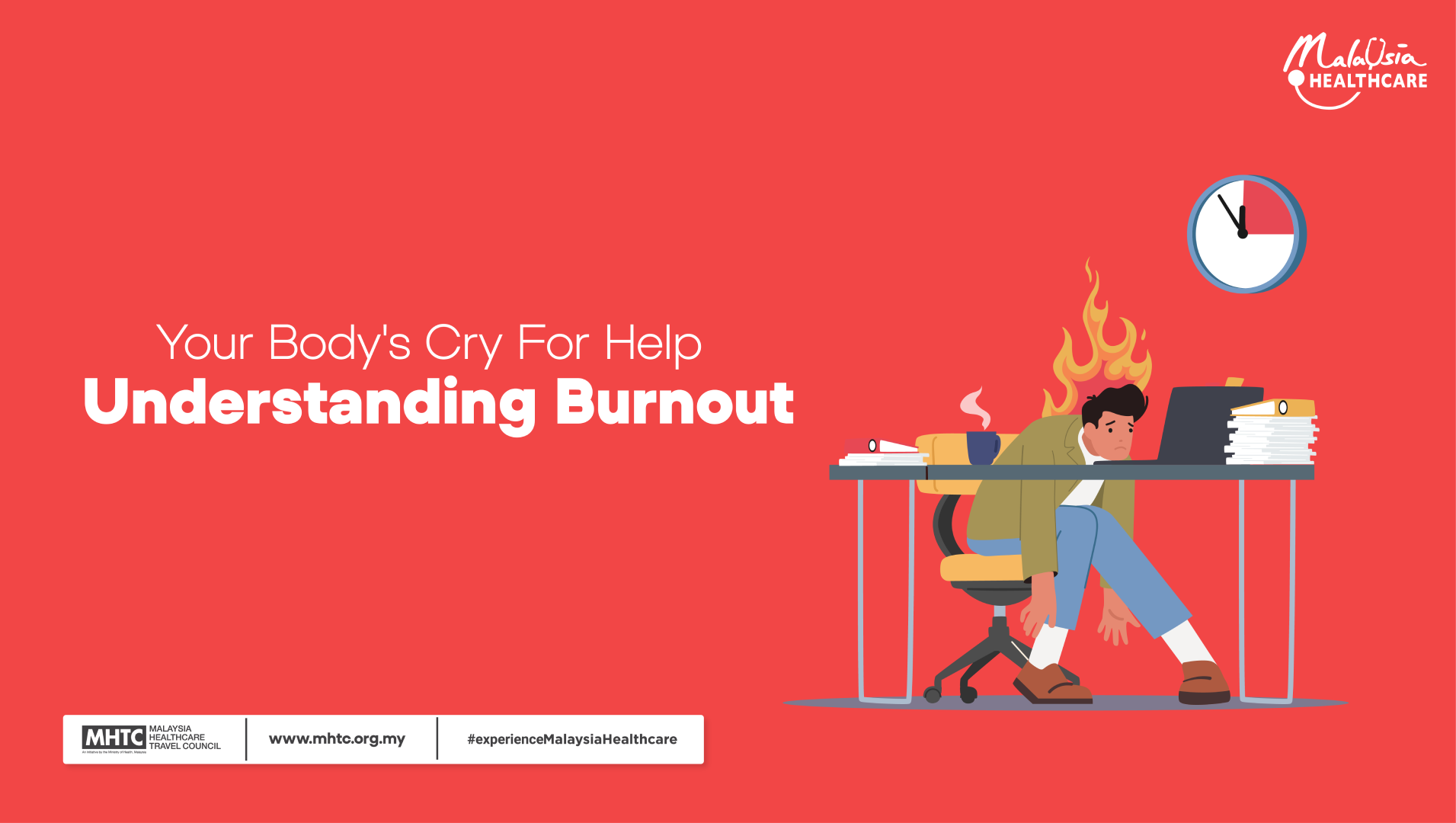
What is Burnout?
Burnout is when you are exhausted, and this is caused by constantly feeling overwhelmed. It happens when you experience emotional, physical, and mental fatigue for too long. Burnout is usually related to work but it can also happen in other aspects of your life and affects your overall health.
In 2018, Malaysia lost RM14.46 billion (1% of its GDP) in workplace productivity due to mental health issues, says psychiatrist Prof Datuk Dr Andrew Mohanraj. Globally, depression and anxiety at work cost the economy around US$1 trillion that year. The 2024 Wellness at Work Report by Employment Hero also shows a record rise in burnout, from 58% in 2022 to 67% in 2024. Millennials are the most affected (69%), followed by Gen Z (64%).

Image by DC Studio, designed on Freepik
What does burnout feel like and what are the signs of burnout?
Physical signs:
- Gastrointestinal problems
- High blood pressure
- Getting sick more often
- Recurring headaches
- Insomnia
- Unexplained muscle tension and pain
Mental signs:
- Forgetful and difficulty concentrating
- Moody and depressed
- Feeling worthless
- Loss of interest in work and things that you used to enjoy
- Feeling suicidal
- Difficulty maintaining relationships
- Easily irritated and difficult to control frustrations with co-workers
Reminder: If you are having suicidal thoughts, you are not alone and there is support available. You deserve to feel supported. Click here for the list of helplines.

Image by pressfoto, designed on Freepik
What causes burnout?
A stressful lifestyle can push you to your limits. It will leave you feeling exhausted, unmotivated, and overwhelmed. Some common causes include:
- Feeling overworked
- Constant pressure
- Having conflicts at work
- Extreme commitment that leads to self-neglect
Is burnout the same as depression?
Burnout shares similarities to some mental health conditions including depression. Depression often includes losing interest in things, feeling hopeless, and suicidal thoughts. When you are depressed, you will have negative feelings and thoughts about all aspects of life. Seeking support is vital because prolonged period of burnout may increase the risk of having depression.
If you are having depression symptoms for more than 14 days , you are advised to take Depression, Anxiety & Stress Scale (DASS) questionnaire at https://mits.moh.gov.my/Modules/Patient/public-dass/ and seek immediate medical attention.
How to deal with burnout?
- Take regular breaks
- Learn meditation or other mindfulness techniques
- Eat a healthy and balanced diet
- Exercise regularly
- Practice healthy sleep habits
- Taking a vacation
Are you concerned about the risk of burnout?
You may book an appointment with any of the hospitals or clinics in Malaysia to have your health check.
Need help to find your healthcare provider? View the list of MHTC’s member hospitals in Malaysia here:
Here at Malaysia Healthcare, we prioritise a patient’s entire being, not just their physical symptoms or diagnosis, but taking into account their mental, emotional, social, and even spiritual well-being. This ensures their needs are met holistically with personalised care that supports every aspect of their healing and recovery journey.
References:


